


From Rote Learning to Deep Reflection Teaching Tafseer to Kids in 2026
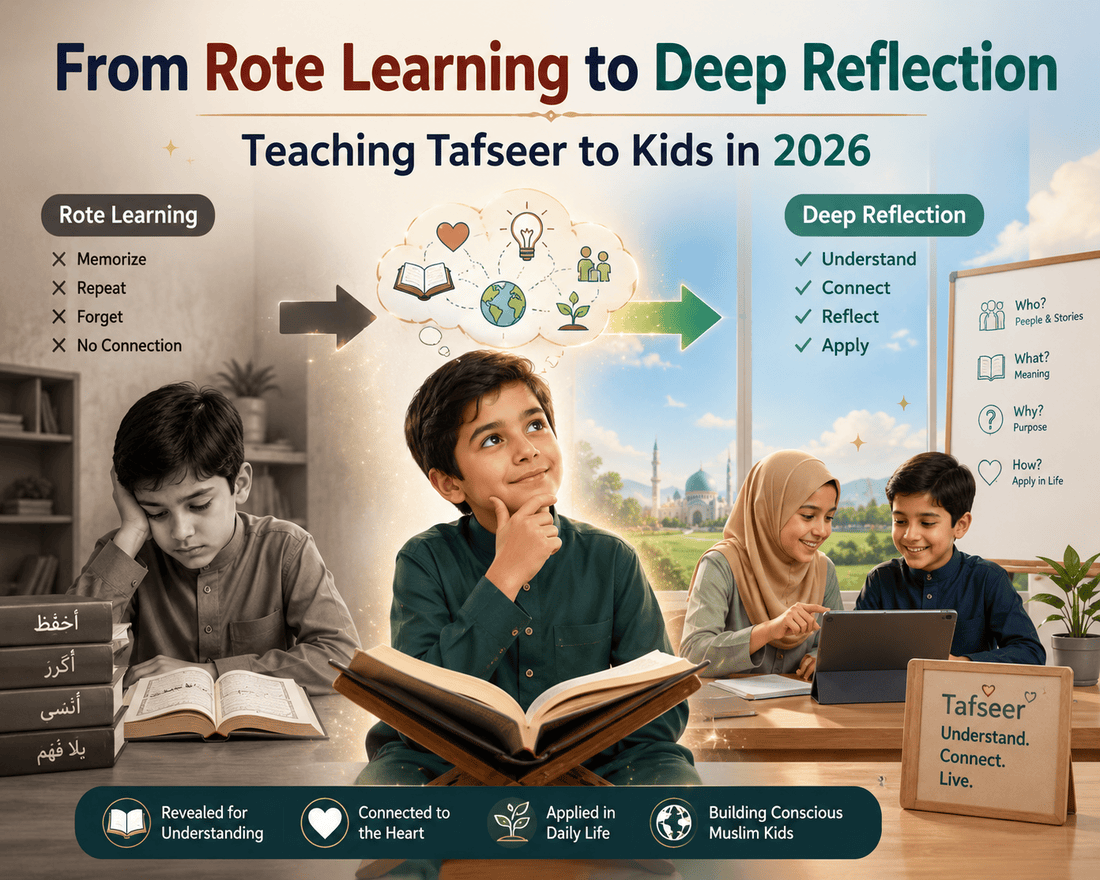
In many traditional Islamic classrooms, the primary focus of Quranic education has long been speed and pronunciation: learning how to decode the Arabic letters, apply Tajweed rules, and memorize Surahs. While mastering the correct recitation is a vital and highly rewarded act of worship, it is only the first step toward a deeper connection with the Divine.
The Quran was sent down as a book of guidance and reflection. Allah says:"This is a blessed Book which We have revealed to you, [O Muhammad], that they might reflect upon its verses and that those of understanding would be reminded." (Surah Sad 38:29)
For a child growing up in 2026, surrounded by ethical questions, digital influences, and diverse viewpoints, simply knowing how to recite the Quran is not enough. They must understand what they are reciting, connect with why it was revealed, and learn how to apply its wisdom to their daily challenges. Here is a modern guide on how to transition from rote learning to deep reflection (Tadabbur) and teach Tafseer to kids in a way that captures their hearts.
1. Start with the Power of Storytelling
Children do not connect with dry theological definitions; they connect with stories. The Quran itself uses storytelling (Qisas) as its primary tool for teaching lessons, building empathy, and explaining complex moral choices.
When teaching a Surah, start with the narrative behind it:
-
The Context (Asbab al-Nuzul): Why did Allah send down this specific Surah? For example, explain how Surah Ad-Duha was revealed to comfort the Prophet Muhammad (peace be upon him) when he felt sad and thought revelation had stopped. Children instantly connect with feelings of loneliness or sadness, and this makes the Surah deeply personal to them.
-
The Quranic Stories Hub: Use narrative resources to make lessons visual and narrative. Exploring age-appropriate Islamic Stories and Quranic Narratives helps kids visualize the historical context and moral lessons of the Prophets and righteous people.
2. Connect Tafseer to the Names and Attributes of Allah
Understanding the Quran is impossible without understanding the One who revealed it. When kids read about Allah’s actions, commands, and promises in a Surah, they need to connect it to His character.
-
Explore Allah's Names: If a verse mentions forgiveness, discuss what it means that Allah is Al-Ghafoor (The Forgiving). If it mentions safety, connect it to Al-Mu'min (The Giver of Security).
-
Interactive Names Tools: Encourage kids to explore resources like the 99 Names of Allah. Discovering the meaning and daily application of each attribute helps them recognize Allah’s presence, love, and mercy in every verse they recite.
3. Practice Active Reflection (Tadabbur)
Tafseer is the explanation of the text, while Tadabbur is the personal application of that text to one's life. Encourage active reflection by asking open-ended questions after reading a verse:
-
"Why do you think Allah used this specific word here?"
-
"If you were in the position of the companions listening to this verse for the first time, how would you change your behavior?"
-
"What is one lesson from this Surah that we can practice as a family this week?"
Keep a "Quran Journal" where your child can draw, write, or mind-map their thoughts on their favorite verses. This shifts the Quran from a classroom subject to a personal diary of spiritual growth.
4. Make it Visual and Interactive
In 2026, interactive and visual learning is standard. Text-heavy explanations can quickly lose a child's interest.
-
Use Mind-Maps: Draw simple diagrams showing how different verses in a Surah connect to a central theme (e.g., how Surah Luqman outlines advice on speech, parenting, pride, and prayer).
-
Use Multimedia and Interactive Tools: Supplement lessons with high-quality educational videos, animations, and interactive apps that explain Arabic vocabulary words in context.
5. Leverage Structured Mentorship
Teaching Tafseer requires patience and a structured curriculum. While parents can do a lot at home, partnering with structured online academies ensures that your child is learning authentic Tafseer from trained scholars who know how to engage young minds.
-
Expert-Led Instruction: Find online classes where teachers don't just listen to recitation but actively discuss the meaning, context, and spiritual lessons of each Surah.
-
Structured Curriculums: Enrolling your children in programs like Online Quran Classes for Kids or structured Tajweed and Comprehension Programs provides them with a clear, step-by-step pathway from basic reading to deep textual reflection.
Conclusion: Planting Seeds for the Future
When we teach children only how to recite the Quran, we give them a key. But when we teach them Tafseer and Tadabbur, we show them how to open the door and walk through it. By cultivating reflection and understanding from a young age, we help our children build an intellectual and emotional anchor in the Quran that will guide, comfort, and protect them through all of life's stages.
About the Author
Quran In Depth is a comprehensive digital platform dedicated to making Quranic learning accessible, interactive, and engaging for modern Muslim families. Through smart tools like Tajweed testers, custom quizzes, and structured online classes led by Al-Azhar certified native tutors, Quran In Depth helps students of all ages build a meaningful, daily relationship with the Book of Allah.

 English
 Arabic
 French
 Spanish
 Portuguese
 Deutsch
 Turkish
 Dutch
Dutch
 Italiano
 Romaian
 Portuguese (Brazil)
 Greek
Greek
