


Hifz Online: Can You Really Memorize the Quran with an Online Teacher?
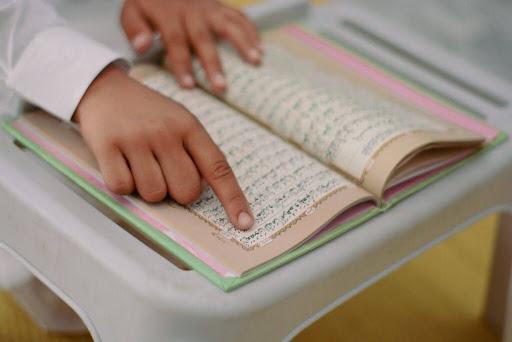
A few years ago, if you told a traditional Islamic scholar that thousands of students were completing their Hifz through a screen with a teacher they had never met in person, sitting in a different country the response would probably have been skeptical. Today, that is simply the reality for a growing number of Huffaz around the world.
But skepticism about online Hifz has not disappeared. It has just shifted from scholars to parents and students who are trying to decide whether it is right for them. The questions they are asking are real and deserve honest answers not the kind of polished marketing copy you find on academy websites, but an actual look at what online Hifz involves, where it works, and where it does not.
The Concern That Comes Up Every Time
The most common objection to online Hifz goes something like this: "How can a teacher correct you properly through a screen? Hifz requires presence. It requires the teacher to hear every breath, every letter, every pause."
This concern is not wrong it is just incomplete.
The truth is, the correction that matters most in Hifz is the correction of recitation. A qualified teacher listening through a quality microphone and speaker can hear a student's makharij, their Ghunnah, their madd lengths, and their pronunciation of the letters that non-native Arabic speakers consistently confuse. What they cannot do is sit beside the student physically. But that specific absence does not break the learning process. What breaks the learning process is inconsistency, a weak teacher, or a student who is not genuinely committed. Those problems exist in physical madrasas too.
The question was never really about online versus in-person. It was always about the quality of instruction and the discipline of the student. The screen is just the medium.
What Actually Makes Online Hifz Work
There are students who have completed Hifz online in under two years. There are others who have been "in progress" for five years and are still on the fifteenth Juz. The difference between them is almost never the platform. It comes down to a few specific things.
A teacher who actually listens, not just monitors
The worst version of online Hifz looks like this: a student recites, the teacher nods, they move on. New sabaq is given. No real correction happens. The student memorizes 20 pages of slightly wrong pronunciation and spends months unlearning it later.
The best version is the opposite. The teacher stops the student mid-verse when a letter is off. They make the student repeat not just the word but the specific letter, multiple times, until the mouth produces it correctly automatically. That kind of teaching is possible online. It requires a teacher who takes the job seriously enough to actually listen not just sit on the call.
A revision system that is non-negotiable
The biggest reason students lose their Hifz online or otherwise is that new memorization gets prioritized over revision of older portions. It feels like progress to memorize new pages. It does not feel like progress to go back and recite what you already know.
But without structured Muraja'ah, the Quran does not stay. It is not a character flaw; it is simply how human memory works. What moves a verse from short-term recall to something that will be with you for life is repeated, spaced retrieval reciting it again and again over weeks and months until it no longer requires effort.
A good online Hifz program builds this into the structure of every session. New memorization happens, but it happens alongside daily revision of recent work, weekly revision of the current Juz, and monthly review of everything completed. Students who follow this system retain. Students who skip revision forget.
The student's environment at home
This one is harder to control, but it matters enormously. A student in a physical madrasa is surrounded by other students doing the same thing. The environment itself creates pressure, routine, and accountability. At home, those external forces are absent which means the student has to create them internally, or rely on the structure their teacher provides.
This is not a reason to avoid online Hifz. It is a reason to take the structure of your program seriously, to show up to every class, and to practice between sessions rather than treating the class itself as the only time Quran gets opened.
Adults Who Think They Have Missed Their Chance
One of the most common things said by adults considering Hifz is some version of: "I should have done this when I was young. My memory was better then."
There is truth in the observation that children memorize faster. There is also a significant amount of myth in how people apply that observation to themselves.
Adults do not memorize faster in the sense of locking in large amounts of new material quickly. But adults understand what they are memorizing in a way children rarely do. They have context for the verses, emotional connection to the meanings, and the discipline to maintain a practice in a way that many children, dependent on parental enforcement, do not.
The adults who complete Hifz online are typically those who have accepted that their pace will be different from a ten-year-old's pace, and that this is completely fine. They memorize less per day. They revise more carefully. They take longer overall. And at the end, they have something that belongs to them entirely not because a parent sent them to a madrasa, but because they chose it themselves.
If you are an adult wondering whether online Hifz is realistic for you, the program at The Quranic Academy is structured to accommodate adult learners specifically with flexible scheduling, patient qualified teachers, and a pace that works around work and family commitments rather than ignoring them.
What to Look for Before You Enroll
Not every online Hifz program is the same, and committing to one without checking a few basics is a mistake worth avoiding.
Teacher qualifications. The teacher should be a Hafiz or Hafiza themselves, with verifiable experience teaching Hifz to students. Ideally, they hold an Ijazah a certified chain of transmission connecting their recitation back to the Prophet ﷺ through verified teachers. This is the standard that has preserved the Quran's oral tradition for over fourteen centuries.
Trial class availability. Any reputable program will offer a trial session before commitment. Use it to assess whether the teacher actually corrects your recitation or simply moves through material. A teacher who does not correct you in the trial class will not correct you afterward either.
Structured revision built into the curriculum. Ask specifically: how is Muraja'ah handled? If the answer is vague or leaves revision entirely to the student, look elsewhere. Revision should be a scheduled, tracked part of every session not an afterthought.
Male and female teacher options. Many students, particularly sisters, have a strong and entirely valid preference for a female teacher. Programs that offer both male and female qualified teachers give students the choice that matters to them. The Hifz program at The Quranic Academy includes both male and female tutors with the relevant qualifications.
A Realistic Timeline
Students ask this every time, and the honest answer is: it depends.
A child memorizing two pages per day with strong parental support and daily revision can complete the Quran in approximately one and a half to two years. An adult memorizing half a page per day with consistent revision is looking at four to six years. These are not failures of the process they are simply what the process looks like for different people.
What matters is not the timeline. What matters is that at the end of it, the Quran is with you permanently recited correctly, retained deeply, and carried in a way that is genuinely yours.
The Actual Answer to the Question
Can you really memorize the Quran with an online teacher?
Yes. With a qualified teacher, a structured revision system, and your own consistent effort the outcome is the same whether the teacher is sitting beside you or visible through a screen. The Quran that a student completes online is not a lesser Hifz. It is Hifz.
What does not work is treating online learning as a passive experience something that happens to you while you sit and wait. The screen does not lower the bar. It simply removes the geographic barrier that once kept many sincere students from accessing the right teacher at all.
If you are considering starting, the best first step is a trial class one session with a qualified teacher where you recite, get corrected, and see for yourself what structured online Hifz actually feels like. The Quranic Academy offers a free trial class for new students, which is the most straightforward way to answer the question for yourself rather than spending more time wondering about it.

 Arabic
 French
 Spanish
 Portuguese
 Deutsch
 Turkish
 Dutch
Dutch
 Italiano
 Russian
 Romaian
 Portuguese (Brazil)
 Greek
Greek
