


Dua Fasting Tips for a Spiritually Meaningful Ramadan Journey
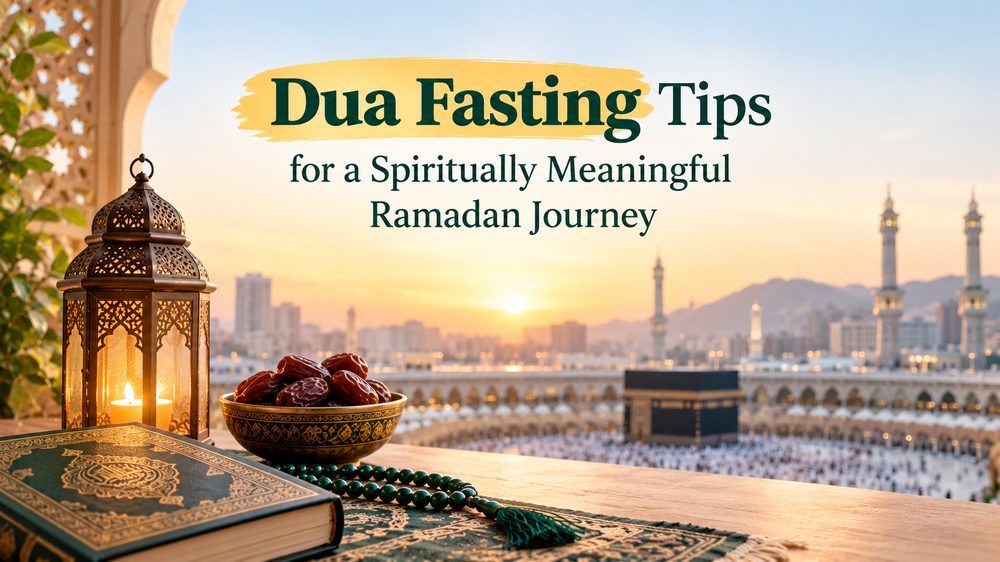
The month of Ramadan is a special month for Muslims throughout the globe. Time for fasting, prayer, introspection, charity and bringing closer to Allah. It's not just about abstaining from food and water until the end of the day. It also helps to learn patience, discipline, thankfulness, and control over habits or actions in everyday life. During this month, Muslims try to enhance their acts of worship and make positive habits that would persist after Ramadhan's end. Fasting can be made more meaningful through Dua Fasting by taking some time to pray and reflect each day.
Understanding the Purpose of Fasting in Ramadan
One of the important acts of worship in Islam is fasting during the month of Ramadhan. It makes Muslims understand the importance of self-control and gives them a reminder of the hardships encountered by those who do not have regular food supplies.
But the fasting doesn't stop at simply going without food. Muslims should also steer clear of bad speech, disagreements, lying and bad actions. During Ramadan one can make new changes both spiritually and personally.
A valuable fasting regimen would be to repeat the prayers regularly, recite the Quran, donate to the poor, and recite duas in sincerity. It may be small acts of worship but when done regularly they can make a big part of a person's Ramadan.
Preparing Your Day Before the Fast Begins
A successful day during the Ramadan season, usually starts before dawn. Suhoor provides Muslims with the energy they need for the day. A balanced meal is important to consume and water often enough to keep energy levels up throughout the fast.
Preparing spiritually is also essential. Muslims can make an intention and ask Allah for guidance and acceptance of their worship before starting the fast.
Having a plan for the daily activities can also help make Ramadan more manageable. Reserving time for work, family duties, prayer and Quran reading helps individuals not feel overwhelmed in their lives.
The Importance of Making Dua During Fasting
The act of reciting Dua is one of the ways that a Muslim's heart is connected to Allah. Many Muslims also spend more time during Ramadhan to seek forgiveness, guidance, mercy and blessings for themselves and their families.
But in making dua, there is no need for a complex language. A man can pray to Allah as he desires and mean it. Some make duas after Salah and some make personal duas throughout the day.
It can also help to have a short list of duas to have with you. It helps the Muslims to recall the religious objectives and pray for significant issues during the month.
Learning About the Dua to Open Fast
If you are fasting, the time of breaking the fast is very significant. Muslims end their fast and thank Allah for giving them a chance to fast another day after a lot of hours without food and water.
Memorizing the duas of the time of breaking the fast allows Muslims to break the fast in an thankful and remembrance manner. This can also be a good opportunity for the families to educate the children on fasting and Islamic traditions.
It's important that it is understood instead of just remembered what the words mean. Islamic supplications can help to strengthen the link between worship and daily life.
Finding the Authentic Dua for Breaking Fast
Many Muslims look for the authentic duas for breaking fast that they are learning correct Islamic practices. It is necessary when learning religious duas to verify them from reliable Islamic sources and to understand the meaning of the duas by knowing the context of it.
Muslims should not only depend on posts on social media for duas and narrations, as they may be different. People can get a correct understanding about Islamic practices by learning from the qualified scholars and reliable Islamic education platforms.
Dua at iftar is not just a recitation of words. It is also a time of thanksgiving, introspection, and hope. This is an opportunity for Muslims to ask Allah to forgive them and make their own prayers.
Building a Strong Ramadan Routine
A good Ramadan routine does not need to include an unrealistic number of activities. People have different responsibilities, including work, education, childcare, and travel. Creating a manageable routine makes it easier to remain consistent.
A simple daily plan may include:
-
Eating suhoor and preparing for the fast
-
Performing the five daily prayers
-
Reading a portion of the Quran
-
Making time for personal dua
-
Helping family members
-
Giving charity when possible
-
Breaking the fast with gratitude
-
Reviewing personal goals before sleeping
Consistency is often more useful than creating a difficult schedule that cannot be maintained. Starting with achievable goals allows people to gradually increase their worship throughout Ramadan.
Staying Spiritually Focused While Travelling
Relocating during the month of Ramadan may pose extra difficulties. Daily routines may be impacted by traveling long distances, schedule changes, and new environments. People of Islam, travelling people should know the Islamic rules on fasting and prayer.
Tips for making the trip easier: Planning ahead can help to make the trip easier. Travellers can better organise their religious obligations by checking prayer times, providing appropriate food and having adequate time to rest.
Individuals organizing religious trips can use tools like Hajj Umrah Planner to handle vital aspects of their travel and gain insight into practical matters concerning pilgrimage and Islamic traveling.
Understanding Dua to Open Fast in Ramadan
The duas to open fast in Ramadhan are very much linked with the daily practice of breaking the fast. The time of Iftar is a moment to reflect and remind people of the purpose of the day.
Muslims can pause to give thanks and pray, rather than immediately move to eating. Families may encourage each other to remember Allah, and make sincere supplications before they go to sleep at night.
This practice can also be used to teach children that the month of Ramadan is not just about switching their eating schedule. A month of worship, training and deepening of our bond with Allah.
Learning Dua to Open Fast in Arabic
Many Muslims desire to learn the dua to open fast in Arabic as Arabic is the language of the Quran and many of the traditional Islamic duas. While learning how to pronounce the correct words is helpful, knowing what they mean is also beneficial.
The Arabic learner shouldn't be discouraged! They can slowly learn over time, but also make sincere duas in a language that they comprehend.
Islam promotes sincerity in worship. A student can develop gradually by practicing, by listening to the right teachers and by reading a correct source of Islam.
Using Ramadan to Improve Daily Habits
During Ramadan time it's a chance to look at daily routines. Muslims can recognize activities that consume too much time and make them less useful and find other activities that consume less time and are more useful.
For instance, if one decreases unnecessary social media use, then there is more time to read the Quran, discuss with family members or pray. Getting to sleep at the right time can also facilitate waking up for suhoor.
This can make a difference over the course of the month with small improvements. However, Muslims can work on establishing habits which can carry over beyond Ramadan, rather than just large goals.
Making Your Ramadan Journey More Meaningful
True spiritual Ramadan doesn't demand perfection. There is no one who has exactly the same situation and problems. The most vital is to make an honest attempt of betterment and staying attached to Allah (SWT).
There might be some days that are easier than others, but it is important to be consistent and have good intentions. Muslims can utilise Ramadan to make their prayers stronger, enhance their conduct, assist others, and learn to be thankful.
Another trick is to use regular reflection. Spending a few minutes reflecting at the end of the day on what was successful and what could have been better may help participants grow throughout the month.
Muslims can make Ramadan a fruitful time of spiritual growth through fasting, prayer, charity, sincere supplication, and Quran recitation. What was learned in the month of Ramadan can stay with us after Ramadan is over.
Conclusion
Ramadan is a good time to reinforce religious beliefs and enhance personal habits. Muslims can benefit from the month by proper preparation for every fast, sincere prayers, knowledge of reliable Islamic supplications and maintaining a well-balanced routine.
The purpose of Ramadan is always related to worship, self control and spiritual growth whether people are fasting at home, handling their responsibilities in work, or travelling. With this emphasis on sincere effort and regular worship, it is expected that each Muslim will strive towards a more meaningful Ramadan using Dua fasting.
FAQs
What is Dua fasting?
Dua fasting refers to making sincere supplications and remembering Allah while observing a fast.
What is the dua to open fast?
Muslims make supplications at iftar and thank Allah after completing the day's fast.
Why is Ramadan important for Muslims?
Ramadan is a month of fasting, prayer, charity, self-reflection, and spiritual growth.
Can travellers fast during Ramadan?
Islam provides guidance and concessions for eligible travellers depending on their circumstances.
Why should Muslims make dua during Ramadan?
Dua helps Muslims ask Allah for forgiveness, guidance, mercy, and blessings.

 English
 Arabic
 French
 Spanish
 Portuguese
 Turkish
 Dutch
Dutch
 Italiano
 Russian
 Romaian
 Portuguese (Brazil)
 Greek
Greek
